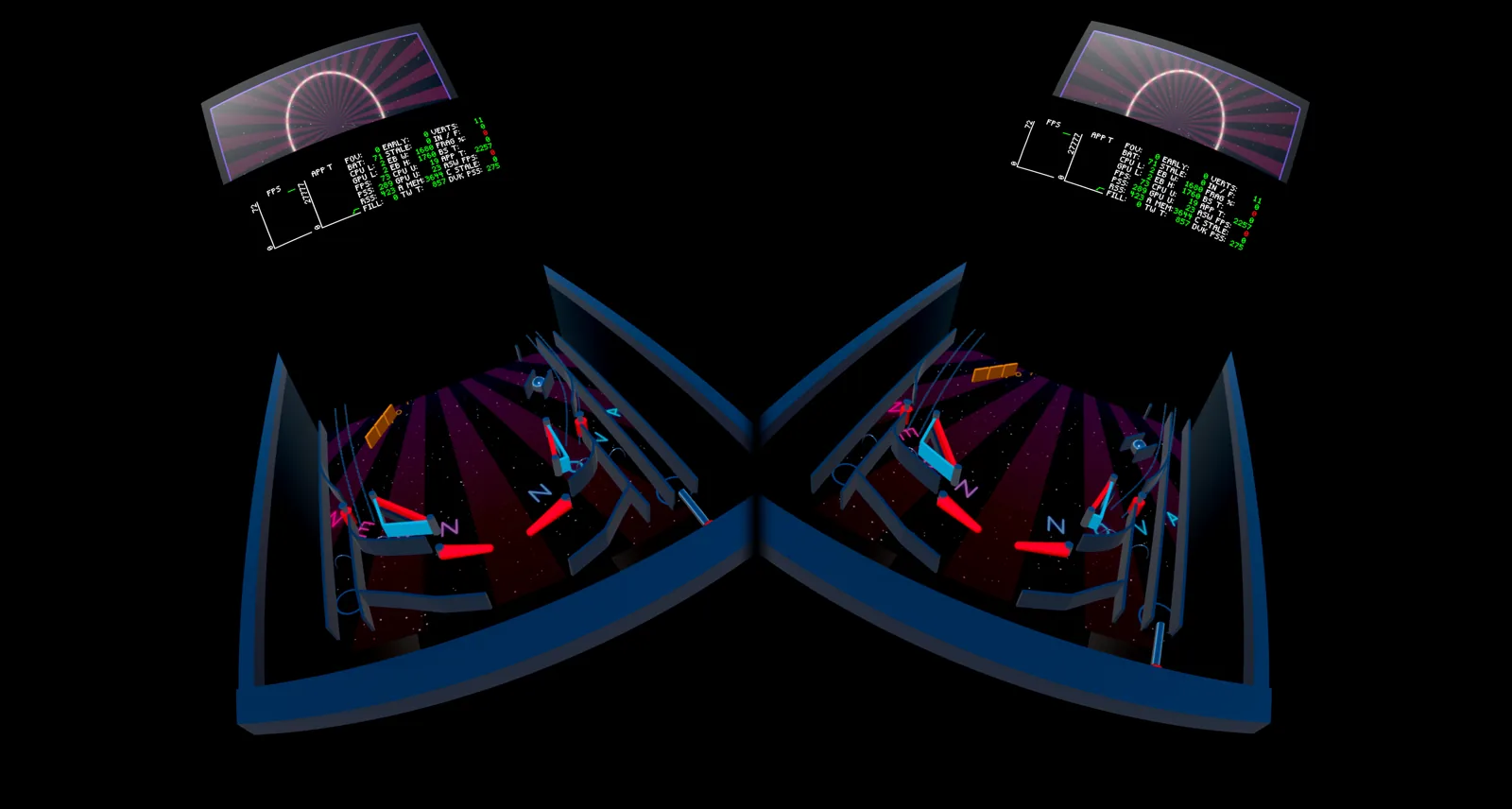
Begin with a controlled launch
The plunger is variable-strength rather than a simple on-and-off launch. A full pull is useful when you want maximum travel, but repeatable partial launches matter when a table lane or mode rewards a more precise entry. Watch the ball’s first path before changing strength on the next attempt.
Treat the opening seconds as information. Where did the ball contact first? Which lane did it favour? A repeatable launch gives you a stable starting point for learning the rest of the machine.
- Use the on-screen control legend for the current device.
- Change one part of the launch at a time.
- Keep your attention on the upper playfield after release.
Aim with timing, not frantic flipping
A pinball flipper is an aiming surface. The ball’s contact point changes the outgoing angle: an earlier strike tends to send it toward one side of the playfield, while a later contact can redirect it toward the other. The useful habit is to watch the ball approach the flipper and choose a target before pressing.
Rapidly firing both flippers can save an occasional ball, but it also removes control and makes the centre drain harder to defend. Separate left and right decisions whenever there is time.
Nudge with restraint
Cabinet nudging changes the relationship between the ball and the table. It can rescue a dangerous trajectory or move the ball away from an outlane, but repeated or excessive movement can trigger tilt behaviour. The goal is a small correction, not continuous shaking.
Learn the danger zones first: the outer lanes, the gap between the flippers and any return that arrives too quickly to trap. Save nudges for those moments.
Read the machine as a set of goals
NEON NOVA is more than a score counter. Lanes, targets and table events build toward modes and multiball. When an indicator changes, follow the newly lit route instead of taking the safest shot forever. A lower score with one newly understood mode is often more useful than a random high-scoring ball.
At the end of a game, enter a classic three-character score and compare your result with your previous run. In local alternating play, up to four people can share the same device and take turns rather than passing separate accounts around.